What Is Outbound Lead Generation?
A complete guide to outbound lead generation in 2026: what it is, the eight-stage process, the strategies and methods that still work, the AI and tool stack behind modern outreach, inbound vs outbound, the mistakes that sink campaigns, and the metrics worth tracking.

B2B businesses are operating in a fiercely competitive market in 2026, and buyers are better informed than they have ever been. Inbound marketing helps brands build visibility organically and draw potential clients in, but on its own it is rarely enough. Companies now need proactive systems that let them identify prospects and opportunities directly.
This is why outbound lead generation remains one of the most powerful strategies available. It combines AI-powered prospecting, LinkedIn outreach, personalized cold email campaigns, and multichannel sales engagement into a single motion. What was once a volume game has grown into a sophisticated process built on precision targeting, and the businesses that learn to combine these approaches are the ones building scalable sales pipelines.
What Is Outbound Lead Generation?
Outbound lead generation is the process where businesses proactively reach out to potential customers themselves, with the goal of generating interest in their product or service. Instead of waiting for prospects to discover a company through search engines or social media, the business contacts targeted prospects directly through outbound communication channels.
In B2B sales, outbound lead generation focuses on reaching business decision-makers such as founders, CEOs, marketing managers, sales directors, HR heads, procurement officers, and IT executives.
The purpose of outbound lead generation is to:
- Identify ideal prospects
- Start meaningful conversations
- Generate qualified leads
- Book meetings or demos
- Move leads into the sales pipeline
- Convert prospects into customers
Inbound marketing focuses on attracting traffic organically. Outbound lead generation gives businesses far greater control over who they target and which sales opportunities they pursue. If you are new to the wider discipline, start with our guide to B2B lead generation, which covers both halves of the motion.
Why Outbound Lead Generation Matters in 2026
The B2B market has become crowded and intensely competitive as more businesses produce more content, which makes it increasingly difficult for any one company to stand out organically. Outbound lead generation sidesteps that problem by approaching high-value prospects directly.
| Benefit | Description |
|---|---|
| Faster results | Generates opportunities quicker than SEO or inbound |
| Better targeting | Focuses on specific industries and decision-makers |
| Predictable pipeline | Creates consistent lead flow |
| Scalability | Campaigns can expand rapidly |
| Market expansion | Helps businesses enter new industries or regions |
Outbound lead generation is particularly valuable for:
- SaaS companies
- Digital marketing agencies
- IT service providers
- Enterprise software businesses
- Consulting firms
- Recruitment agencies
- B2B startups
For businesses chasing rapid growth, outbound lead generation is often the fastest path to acquiring customers.
How Outbound Lead Generation Has Changed
Outbound sales have changed dramatically over the last decade. Traditional outbound relied heavily on cold calling and mass email campaigns, with sales representatives contacting thousands of prospects using identical messaging. The result was poor response rates and low engagement.
Modern outbound lead generation is far more advanced, because B2B buyers now expect a business to understand their industry and their challenges before it makes contact. That expectation has forced companies to prioritise personalisation before a conversation even begins.
| Traditional outbound | Modern outbound |
|---|---|
| Mass cold emails | Personalised outreach |
| Random cold calling | Intent-based prospecting |
| Manual processes | AI-powered automation |
| One-channel outreach | Multichannel engagement |
| Generic messaging | Industry-specific messaging |
| Aggressive sales pitch | Consultative communication |
Outbound lead generation is no longer about volume alone. Success now depends on delivering relevant communication at the right time.
Understanding the Outbound Lead Generation Process
A working outbound motion moves through several distinct stages, and skipping any one of them tends to show up later as a weak pipeline.
1. Define the Ideal Customer Profile
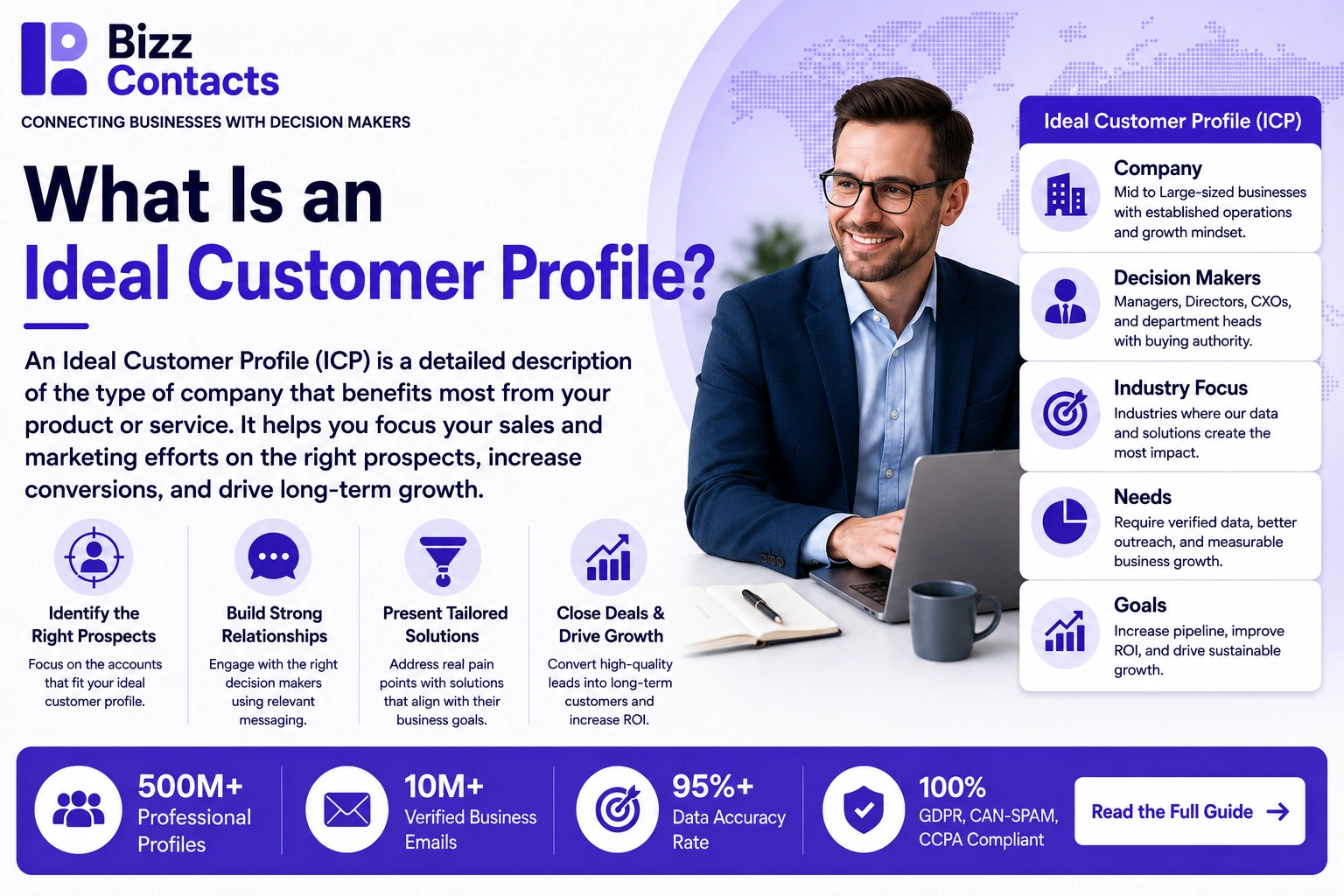
Every successful outbound campaign begins by defining an Ideal Customer Profile. An ICP describes the type of company most likely to buy the business's product or service. Our guide to building an ideal customer profile walks through the exercise in detail.
Common ICP criteria include:
- Industry
- Company size
- Annual revenue
- Geographic location
- Technology stack
- Business pain points
- Buyer roles
- Growth stage
2. Research Your Prospects
Once a business has identified its target audience, it starts collecting prospect information. Sales teams typically draw on:
- Company websites
- Sales intelligence platforms
- CRM databases
- AI prospecting tools
Research is what lets you personalise outreach and understand what a prospect actually needs. The same groundwork underpins effective B2B prospecting.
3. Build the Prospect List
After the research is done, businesses assemble prospect databases containing:
- Contact names
- Job titles
- Email addresses
- Company details
- LinkedIn profiles
- Industry data
Accurate prospect data is critical to outbound campaign performance. Building from a verified B2B contact database removes most of the bounce risk before the first send.
4. Create the Outreach Campaign
Businesses then design outreach sequences that engage prospects across several channels. A campaign may include:
- Cold email sequences
- LinkedIn connection requests
- Follow-up messages
- Phone call scripts
- Video outreach
- Webinar invitations
Newer campaigns are built around value-driven communication rather than aggressive selling.
5. Launch the Outreach
Sales representatives begin contacting prospects across the chosen channels. The most popular outbound channels are:
- Phone calls
- Paid ads
- Video messaging
- SMS outreach
- Webinars
6. Qualify the Leads
Not every prospect becomes a qualified lead. Businesses evaluate leads against:
- Budget
- Authority
- Need
- Timeline
- Interest level
7. Set the Appointment
The end goal of many outbound campaigns is to schedule a meeting or demo with a decision-maker. Sales teams use discovery calls at this stage to understand a prospect's challenges properly before proposing anything.
8. Nurture the Leads
Many B2B buyers are not ready to purchase immediately, which is why lead nurturing is essential. Businesses keep prospects engaged through:
- Follow-up emails
- Relevant content
- Case studies
- Product updates
- Industry insights
A strong nurturing sequence improves conversion rates significantly.
Top Outbound Lead Generation Strategies in 2026
A strong outbound lead generation strategy is a combination of personalization, automation, and data-driven targeting.
Hyper-Personalized Cold Email Campaigns
Cold email remains one of the strongest outbound lead generation methods, though results vary widely between campaigns. Generic templates no longer perform.
Modern cold email campaigns include:
- Personalized subject lines
- Prospect-specific pain points
- Relevant business insights
- Clear value propositions
- Concise formatting
- Strong calls-to-action
Here is an example of weak outreach:
"Hi, we offer marketing services for businesses."
And here is the same opening done well:
"Hi Sarah, I noticed your SaaS company recently expanded into Europe. Many SaaS brands struggle with localized lead generation during rapid expansion. We recently helped a similar company increase qualified demo bookings by 43%."
Personalization improves open and response rates dramatically.
LinkedIn Prospecting
LinkedIn has become one of the most powerful platforms for B2B outbound lead generation. Businesses use it for:
- Prospect research
- Networking
- Social selling
- Thought leadership
- Booking appointments
LinkedIn outreach works best when a business focuses on building the relationship before pitching anything. The BizzContacts Chrome extension speeds this up by revealing verified contact details straight from a profile.
Account-Based Marketing
Account-based marketing targets a small set of high-value accounts rather than a large prospect list. ABM campaigns involve:
- Personalised outreach
- Industry-specific content
- Multi-stakeholder targeting
- Sales and marketing collaboration
ABM is highly effective for enterprise B2B sales, where a single account can justify a bespoke campaign.
AI-Powered Prospecting
Artificial intelligence has played a large part in reshaping outbound lead generation in 2026. The best AI tooling for B2B outbound helps businesses:
- Identify buying intent
- Predict lead quality
- Personalize messaging
- Automate workflows
- Analyze prospect behavior
- Optimize outreach timing
Used well, AI lets a team scale outreach without losing the personalization that makes it work.
Social Selling
Social selling focuses on building trust through online engagement. Sales professionals share:
- Industry insights
- Educational content
- Market trends
- Case studies
- Thought leadership posts
This warms prospects up long before the first direct conversation.
Multichannel Prospecting
Few prospects respond to a single touch on a single channel. A typical multichannel sequence looks like this:
| Day | Channel |
|---|---|
| Day 1 | Personalized email |
| Day 3 | LinkedIn connection |
| Day 5 | Follow-up email |
| Day 7 | Phone call |
| Day 10 | Case study email |
Multichannel campaigns increase visibility and improve response rates.
Outbound Lead Generation Methods
Businesses use several outbound methods to create B2B opportunities, and most successful teams run more than one.
Cold Calling
Cold calling is still highly effective when it is combined with personalization and consultative communication. Modern cold calls focus on:
- Understanding pain points
- Building relationships
- Asking strategic questions
- Offering relevant solutions
Aggressive scripts, by contrast, are becoming steadily less effective.
Cold Email Outreach
Cold emailing remains the most scalable outbound method available. Its main benefits are:
- Easy automation
- Personalization at scale
- Campaign tracking
- A/B testing
- Scalable outreach
Businesses often pair cold email with LinkedIn engagement, because the two channels together give a prospect more context than either does alone.
Webinar Outreach
Webinars let businesses educate prospects and generate qualified leads from the audience that shows up. Popular webinar topics include:
- Industry trends
- Product demonstrations
- Best practices
- Market research
- Customer success stories
A good webinar positions the business as a trusted expert and gives attendees a reason to start the conversation themselves.
Video Prospecting
Personalized video outreach is becoming increasingly popular, because a short recorded message feels far more engaging than plain text.
Paid Outbound Advertising
Businesses use paid ads to support outbound campaigns and reinforce the message across channels. Popular options include:
- LinkedIn Ads
- Retargeting campaigns
- Sponsored content
- Account-targeted advertising
Paid ads raise the brand's visibility across multiple touchpoints, so the cold email lands against a name the prospect already recognises.
The Outbound Lead Generation Funnel
Every outbound motion narrows in the same way, from a broad prospect list down to a signed customer.
- Prospecting
- Initial outreach
- Engagement
- Lead qualification
- Meeting or demo
- Sales opportunity
- Customer conversion
Each stage needs to be optimised on its own terms. Improving reply rates is wasted effort if the meetings that follow are booked with the wrong accounts.
Inbound vs Outbound Lead Generation
The debate around inbound versus outbound is a long-running one, largely because both approaches offer genuinely different advantages.
What Is Inbound Lead Generation?
Inbound lead generation attracts prospects organically through valuable content and digital visibility. Common inbound channels include:
- SEO
- Blogging
- Content marketing
- YouTube
- Social media
- Podcasts
- Organic search
Inbound marketing is about attracting buyers naturally rather than interrupting them.
Benefits of Inbound Marketing
Inbound offers several long-term advantages:
- Builds brand authority
- Generates organic traffic
- Creates long-term visibility
- Improves customer trust
- Reduces acquisition costs
The trade-off is time. Inbound marketing usually needs months before it produces consistent results.
Benefits of Outbound Lead Generation
Many B2B teams report that outbound campaigns generate faster returns than inbound marketing alone, because outbound offers more direct growth opportunities:
- Faster pipeline growth
- Better targeting control
- Easier scalability
- Predictable lead flow
- Immediate market reach
Which Is More Valuable?
Most successful B2B companies run both. The right emphasis depends on your goals. Inbound marketing works best for:
- Long-term brand building
- SEO-driven traffic
- Educational marketing
- Sustainable organic growth
Outbound lead generation works best for:
- Fast revenue growth
- Enterprise prospecting
- New market expansion
- Predictable sales pipelines
The Hybrid Lead Generation Strategy
A hybrid model combines the strengths of both, so the brand equity inbound builds makes every outbound touch land more softly.
This balanced approach helps businesses scale faster while still building long-term authority.
The Best AI for B2B Outbound Lead Generation
Artificial intelligence now sits at the centre of most outbound sales operations, mainly because it improves targeting and personalization at the same time.
| Feature | Benefit |
|---|---|
| Predictive analytics | Improves lead targeting |
| AI writing assistance | Speeds up personalization |
| Lead scoring | Prioritizes qualified prospects |
| Intent tracking | Detects buying behavior |
| Workflow automation | Saves time |
| Conversation analytics | Improves messaging quality |
AI-powered outbound systems let a small team operate at a scale that used to need a much larger one.
Outbound Lead Generation Companies
Plenty of businesses outsource prospecting to specialist outbound lead generation companies. These agencies typically provide:
- Lead research
- Appointment setting
- Cold outreach
- SDR services
- LinkedIn prospecting
- CRM management
- Campaign optimization
What to Look for in an Outbound Partner
Choosing the right partner matters, so evaluate each one on:
- Industry experience
- Data quality
- Personalization capabilities
- Reporting transparency
- Case studies
- Compliance standards
The right outbound partner can accelerate pipeline growth considerably. The wrong one burns your domain reputation on someone else's list.
Essential Outbound Lead Generation Tools
Technology carries a lot of the weight in modern outbound campaigns.
CRM Platforms
A CRM helps a business manage its sales pipeline and customer relationships. Core CRM functions include:
- Contact management
- Pipeline tracking
- Workflow automation
- Reporting dashboards
- Sales forecasting
Email Automation Tools
Email platforms automate outreach campaigns and make the whole process smoother to run. The features that matter most are:
- Sequence automation
- Open tracking
- Click tracking
- A/B testing
- Personalized messaging
Sales Intelligence Platforms
Sales intelligence tools supply prospect data and buying signals, which is what lifts targeting accuracy above guesswork. A verified B2B email list or a targeted C-level executive list gives outbound campaigns a clean foundation to work from.
LinkedIn Prospecting Tools
LinkedIn tools let teams scale their social selling efforts efficiently, whatever the size of the company running them.
AI Writing Assistants
AI writing tools help sales teams draft personalized outreach faster, which matters when the alternative is a template every decision-maker has already seen.
Outbound Lead Generation Examples
These examples show how the strategies above come together in practice.
Example 1: A SaaS Company
A SaaS company targeting HR managers built its campaign around:
- LinkedIn prospecting
- Personalized cold emails
- Webinar invitations
- AI-powered follow-ups
The outcome was more demo bookings, higher engagement rates, and improved conversion.
Example 2: A Marketing Agency
A marketing agency targeting eCommerce businesses used personalized audit videos, supported by:
- Custom video outreach
- LinkedIn engagement
- Follow-up sequences
- Retargeting ads
The result was better prospect engagement, more qualified meetings, and stronger client acquisition.
Example 3: An IT Consulting Firm
An IT consulting company targeting manufacturing businesses leaned on:
- Industry-focused cold calls
- Educational emails
- Case studies
- LinkedIn networking
That combination opened enterprise-level opportunities, built trust faster, and delivered a higher return.
Common Mistakes to Avoid in Outbound Outreach
Most outbound campaigns fail for predictable reasons, and the teams running them are often aware of the problem well before they fix it.
| Mistake | Why it hurts performance |
|---|---|
| Poor targeting | Reaching irrelevant audiences drags down every metric downstream |
| Generic messaging | Mass messages with no personalization get ignored |
| Weak follow-up | Most prospects never reply to the first touch, so consistent follow-up is non-negotiable |
| Over-automation | Too much automation makes outreach feel robotic and impersonal |
| Weak value propositions | Prospects need a clear reason to engage at all |
| Ignoring data quality | Outdated prospect data lowers deliverability and wastes rep time |
| No sales and marketing alignment | Mixed messaging between teams confuses the buyer |
The balance to strike is between automation and genuine human interaction. Automation should remove the admin, not the judgement.
How to Improve Your Outbound Results
Outbound performance improves through continuous optimization, which means keeping an eye on the whole process rather than one metric.
Prioritise Personalization
Tailored communication improves response rates more reliably than any other single change.
Use Intent Data
Intent signals help you identify which accounts are actively in-market instead of guessing at timing.
Align Sales and Marketing
Collaboration between the two teams keeps messaging consistent from the first ad impression to the closing call.
Test Campaigns Regularly
The elements worth testing continuously are:
- Subject lines
- Calls-to-action
- Messaging
- Timing
- Outreach channels
Focus on Building Relationships
Outbound sales that prioritise trust and long-term relationships outperform outbound that optimises purely for the next meeting.
What Comes Next for Outbound Lead Generation
- Automation with AI: AI will take on more of the prospecting and personalization workload
- Omnichannel engagement: businesses will integrate every channel, paid ads included, into one sequence
- Intent-based selling: buyer intent data will keep growing in importance as outreach improves across platforms
- Video-first prospecting: video outreach will continue gaining ground
- Human-centric sales: despite the automation, authentic communication stays essential
| Year | Dominant approach |
|---|---|
| 2022 | Traditional cold outreach |
| 2023 | Personalized campaigns |
| 2024 | Multichannel prospecting |
| 2025 | AI-assisted outreach |
| 2026 | Intent-based automation |
Outbound lead generation gets smarter and more personalized every year.
Metrics Worth Monitoring
Tracking campaign performance is what makes optimization possible in the first place.
| Metric | Purpose |
|---|---|
| Open rate | Measures email engagement |
| Reply rate | Measures messaging relevance |
| Conversion rate | Tracks lead quality |
| Meeting rate | Evaluates campaign effectiveness |
| Cost per lead | Measures efficiency |
| Customer acquisition cost | Tracks profitability |
High-performing outbound teams tend to focus on:
- Research
- Personalization
- Communication skills
- Follow-up discipline
- Relationship-building
- Data analysis
It is worth investing in ongoing sales training and tooling alongside the campaigns themselves, because a team that keeps current is the best asset any method has.
Compliance and Ethical Outbound Prospecting
Outbound campaigns have to follow data privacy regulations and ethical communication practices, and those rules differ by region.
At a minimum, businesses should:
- Respect opt-out requests
- Avoid spammy outreach
- Use verified prospect data
- Maintain transparency about where data came from
- Follow GDPR, CAN-SPAM, and local privacy regulations
Ethical outbound does more than keep you compliant. It protects sender reputation and builds the brand credibility that makes the next campaign easier.
Final Words
Outbound lead generation remains one of the most effective ways to reach new buyers in 2026. Companies that run it properly, identifying high-value prospects and personalizing communication, build pipeline they can forecast and revenue they can scale.
Modern outbound comes down to understanding buyer intent and creating conversations with decision-makers that feel personal and relevant. Businesses that combine these strategies will keep gaining a competitive advantage as the B2B market grows.
Ready to put a clean list behind your outbound campaigns? Request a free 50-record sample from the BizzContacts B2B email list, or talk to our team about a custom prospect brief for your ICP.
Calvin Christopher is the Marketing & Sales Manager at BizzContacts, specializing in B2B marketing, lead generation, sales intelligence, and verified business contact data.